

Kimjang is the making of the winter kimchi. In November, when the napa cabbages are at their best and the weather is cold enough to slow fermentation, families and neighbours gather to make enough kimchi to last until spring. UNESCO added it to its intangible heritage list verify year.
The day
The cabbages are halved and salted the night before. In the morning everyone sits round tubs of seasoning: chilli flakes, garlic, ginger, fish sauce, salted shrimp, radish and spring onion. Each leaf is rubbed by hand, the halves folded and packed into tubs or jars. It takes all day. Someone boils pork belly for lunch, and the first fresh kimchi is eaten wrapped round it.
Where to see it
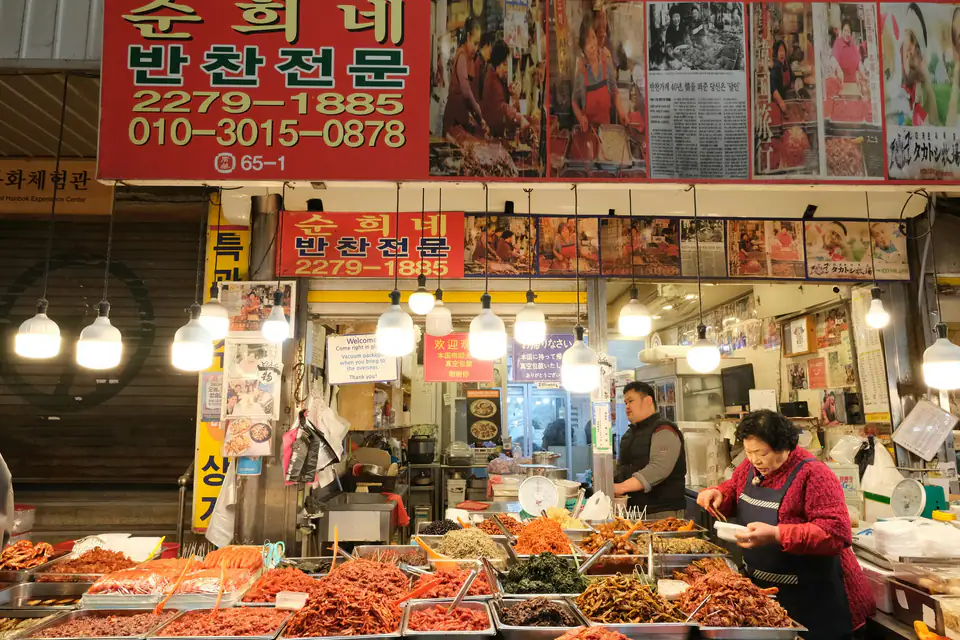
Markets in November are piled with cabbages and sacks of chilli. Some cooking schools and temples run kimjang days for visitors verify. If you are with us in November, we try to find you a seat at a table, with a pair of rubber gloves.